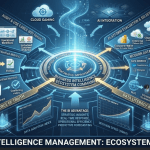

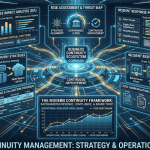







1. The Key Question or Issue
In an era characterized by geopolitical instability, cyber threats, climate shocks, and rapid digital transformation, organizations face a critical question: How can modern businesses design and maintain business continuity strategies that safeguard core operations without over-allocating capital or paralyzing organizational agility?
For many business leaders, continuity planning historically meant filing away a dusty disaster recovery binder or setting up an off-site tape backup. Today, that static approach is inadequate. When an unexpected crisis strikes—whether it is a ransomware attack encrypting central databases, an extreme weather event crippling regional infrastructure, or a critical third-party vendor collapsing overnight—the primary challenge is not merely surviving the initial shock.
The true problem facing modern leadership is achieving operational resilience:
Quantifying Recovery Tolerances: How long can individual business processes remain offline before financial loss, regulatory penalties, or brand damage becomes fatal?
Bridging the IT/Business Divide: How do organizations align technical Disaster Recovery (DR) metrics with overarching Business Continuity Management (BCM) targets?
Navigating Supply Chain Dependencies: How can companies protect themselves against single points of failure in complex, multi-tiered partner networks?
Maintaining Cultural Readiness: How do leaders ensure staff can execute response protocols fluidly when a crisis occurs, rather than treating compliance as a passive exercise?
Solving these challenges requires shifting from reactive emergency response to a strategic, proactive business continuity framework that operates as a core business driver.
2. Context and Background
The Evolution of Business Continuity Management
Business continuity planning has evolved through several distinct phases over the past three decades:
+-------------------------------------------------------------------------+
|                  EVOLUTION OF CONTINUITY PLANNING                       |
+-------------------------------------------------------------------------+
| 1990s - 2000s | Legacy Data Backups & Physical Facilities               |
| 2010s         | IT Disaster Recovery (DR) & Cloud Integration           |
| Modern Era    | Enterprise Operational Resilience & Multi-Tier BCMS     |
+-------------------------------------------------------------------------+
The Infrastructure Era: Early continuity planning focused on physical asset protection—uninterruptible power supplies (UPS), fire suppression systems, and physical tape backups stored off-site.
The IT-Centric Era: As business operations migrated to digital systems, continuity became synonymous with IT disaster recovery. Organizations prioritized server redundancy, secondary data centers, and network failovers.
The Operational Resilience Era: Modern continuity recognizes that IT is only one component of business survival. Today’s business continuity management system (BCMS)—often guided by international frameworks like ISO 22301—addresses people, processes, third-party supply chains, regulatory compliance, and brand reputation.
Primary Drivers of Operational Disruption
Disruptions rarely arrive with advanced warning. Modern business continuity strategies must contend with four major categories of operational risk:
+-------------------------------------------------------------------------+
|                     CATEGORIES OF OPERATIONAL RISK                      |
+-------------------------------------------------------------------------+
| Cyber Threats        | Ransomware, phishing, cloud provider outages    |
| Infrastructure Failures| Power grid instability, supply chain bottlenecks|
| Physical Disasters   | Severe weather, floods, facility fires           |
| Human & Org Risks    | Key personnel loss, regulatory non-compliance   |
+-------------------------------------------------------------------------+
Cyberattack Epidemics: Cyber incidents—particularly distributed denial-of-service (DDoS) attacks, software supply chain compromises, and sophisticated ransomware—represent the fastest-growing source of operational downtime.
Complex Supply Chain Interdependence: Modern lean manufacturing and globalized SaaS ecosystems mean that a disruption at a third- or fourth-tier supplier can trigger cascading failures across an entire enterprise.
Regulatory Rigor: Global regulatory bodies—such as financial sector authorities enforcing operational resilience rules (e.g., DORA in Europe)—increasingly require demonstrable proof that institutions can absorb and recover from operational disruptions within strict timeframes.
Reputational Sensitivity: In a 24/7 digital news cycle, extended downtime or unmanaged communications during a crisis can cause permanent loss of customer trust and market capitalization long before physical operations are restored.
3. Solution and Advice: Constructing a Resilient Business Continuity Strategy
To overcome operational vulnerabilities and build a scalable continuity strategy, organizations must follow a structured, step-by-step roadmap aligned with the Plan-Do-Check-Act (PDCA) methodology.
                  +-----------------------------------+
                  |   ISO 22301 BCMS LIFECYCLE (PDCA)  |
                  +-----------------+-----------------+
                                    |
     +------------------------------+------------------------------+
     |                              |                              |
     v                              v                              v
+------------+             +-----------------+             +---------------+
|   PLAN     |             |       DO        |             | CHECK & ACT   |
| Scope, BIA | ----------> | Deploy Playbooks| ----------> | Drills, Audits|
| & Risk Assessment        | & Team Training |             | & Continuous  |
+------------+             +-----------------+             | Improvement   |
                                                           +---------------+
Step 1: Conduct a Comprehensive Business Impact Analysis (BIA)
The foundation of any business continuity strategy is the Business Impact Analysis (BIA). Rather than treating all business processes as equally vital, a BIA categorizes services based on their criticality to the organization’s survival.
When executing a BIA, establish two essential recovery metrics for every critical function:
Recovery Time Objective (RTO): The maximum targeted duration of time within which a business process must be restored after a disruption to avoid acceptable consequences.
Recovery Point Objective (RPO): The maximum acceptable amount of data loss measured in time (e.g., minutes or hours of un-backed-up work) that an organization can tolerate during a system outage.
| Process / Service | Operational Impact | Typical Target RTO | Target RPO | Strategic Priority |
| Core Payment Processing | Severe financial loss, immediate regulatory penalties | $< 1$ Hour | Near Zero | Priority 1 (Mission-Critical) |
| Customer Support Portal | Brand damage, high customer churn | $< 4$ Hours | $< 1$ Hour | Priority 2 (High) |
| Payroll & HR Processing | Employee dissatisfaction, internal delay | $< 24$ Hours | $< 24$ Hours | Priority 3 (Medium) |
| Internal Analytics / Reporting | Minimal short-term operational impact | $< 72$ Hours | $< 48$ Hours | Priority 4 (Low) |
Step 2: Implement Multi-Layered Recovery Strategies
Once priorities are established, build redundant systems and operational workarounds to meet designated RTO and RPO metrics.
Data & Systems Resilience (Technical DR):
Adopt immutable, air-gapped cloud backups to protect against ransomware corruption.
Implement automated failover protocols for multi-region cloud applications to maintain continuous availability.
Workforce and Site Continuity:
Establish remote work protocols and cross-train team members so that essential functions do not rely on single individuals.
Maintain secondary geographic operational hubs or co-working agreements for teams requiring specialized hardware or secure environments.
Supply Chain Diversification:
Identify single-source dependencies and negotiate secondary supply contracts or maintain buffer inventories for critical materials.
Audit key vendor continuity plans regularly to ensure third-party reliance does not introduce unmanaged exposure.
Step 3: Develop Clear, Actionable Incident Response Playbooks
When a crisis occurs, decision-makers should not have to parse 100-page policy manuals. Create concise, scenario-based playbooks that outline immediate steps:
Command Structure & Roles: Assign clear crisis management team (CMT) leads, technical leads, and logistics managers with explicit authority to make real-time decisions.
Internal and External Crisis Communication: Pre-draft holding statements and communication templates for employees, customers, shareholders, and media outlets to prevent misinformation.
Escalation Pathways: Define strict quantitative triggers (e.g., system offline $> 30$ minutes) that automatically escalate local technical issues to executive-level crisis response.
Step 4: Validate Through Rigorous Exercises and Drills
A continuity plan is only as good as its last successful test. Organizations must move beyond basic paper audits and implement dynamic testing programs:
+-------------------------------------------------------------------------+
|                        CONTINUITY TESTING MATRIX                        |
+-------------------------------------------------------------------------+
| Tabletop Exercises    | Walkthrough scenarios with leadership (Bi-Annual)|
| Functional Drills     | Test specific failovers, e.g., backup restore   |
| Full-Scale Simulations| Live operational cutovers (Annual)               |
+-------------------------------------------------------------------------+
Tabletop Simulations: Gather executive leadership twice a year to walk through realistic crisis scenarios (e.g., executive kidnap, major cyber breach, cloud outage).
Functional Failover Testing: Regularly simulate IT cutovers, power outages, and backup restores to ensure automated systems perform as expected.
Post-Mortem Continuous Improvement: Capture lessons learned after every drill or real incident. Update procedures, software configs, and training materials accordingly to close identified gaps.
4. Conclusion
A successful business continuity strategy is not a static compliance document; it is an active operational discipline that safeguards value, protects brand equity, and enables enterprise agility. As threats grow increasingly complex and interconnected, organizations must shift from simple disaster recovery to comprehensive operational resilience.
By conducting detailed Business Impact Analyses, establishing realistic RTO and RPO targets, maintaining clear incident playbooks, and continuously testing response capabilities under simulated stress, business leaders can transform continuity management from a cost center into a competitive advantage. When disruption strikes, resilient companies do not merely survive—they adapt, maintain stakeholder trust, and recover faster than their peers.
Implementation Summary Checklist
[ ] Executive Support: Secured executive leadership sponsorship and allocated necessary BCMS resources.
[ ] BIA Complete: Identified mission-critical functions and assigned RTO/RPO targets.
[ ] Risk Assessment: Mapped internal, external, and supply chain threats against core dependencies.
[ ] Playbooks Drafted: Created concise incident response procedures and crisis comms protocols.
[ ] Testing Scheduled: Programmed annual tabletop exercises and technical failover simulations.
[ ] Continuous Review: Established a process to audit and update continuity plans every 6 to 12 months.