






Introduction
One of the most common workplace fashion questions today is: Are jeans business casual? The answer is not always straightforward. As workplace dress codes continue to evolve, many professionals find themselves wondering whether their favorite pair of jeans is appropriate for the office.
The rise of flexible work environments, remote work, and modern corporate cultures has blurred the lines between traditional business attire and casual clothing. While jeans were once considered too informal for professional settings, many companies now accept them as part of a business casual wardrobe.
However, not all jeans are created equal. The style, color, fit, and condition of your jeans can determine whether they appear professional or overly casual. Understanding when and how to wear jeans in a business casual environment can help you maintain a polished appearance while enjoying comfort at work.
This guide explains everything you need to know about jeans and business casual dress codes, helping you make confident wardrobe decisions.
The Key Question: Are Jeans Business Casual?
The short answer is yes, jeans can be business casual, but only under certain circumstances.
Business casual is a dress code that balances professionalism with comfort. It is less formal than traditional business attire but more polished than everyday casual clothing.
In many modern workplaces, especially technology companies, startups, marketing agencies, and creative industries, dark-colored, well-fitted jeans are often accepted as business casual attire.
However, acceptance depends on several factors:
- Company culture
- Industry standards
- Client-facing responsibilities
- Workplace dress code policies
- The style and condition of the jeans
For example, dark wash jeans paired with a blazer and dress shoes can look professional and workplace-appropriate. On the other hand, ripped jeans with fading and distressed details generally do not meet business casual standards.
Therefore, jeans can be business casual when chosen and styled correctly.
Understanding Business Casual Dress Codes
Before determining whether jeans fit into a business casual wardrobe, it is important to understand what business casual actually means.
Business casual typically includes:
For Men
- Dress shirts
- Polo shirts
- Chinos
- Khakis
- Sweaters
- Blazers
- Loafers or dress shoes
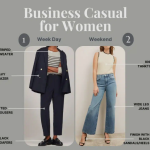
For Women
- Blouses
- Dress pants
- Pencil skirts
- Cardigans
- Blazers
- Flats or professional footwear
The goal of business casual is to appear professional without the formality of a full suit.
As workplace expectations have shifted, many employers have expanded their dress codes to include carefully selected denim.
Why Jeans Are Becoming More Acceptable at Work
Several workplace trends have contributed to the growing acceptance of jeans in professional environments.
1. Changing Workplace Culture
Modern companies increasingly prioritize employee comfort and flexibility. Strict dress codes are becoming less common, especially in industries that focus on creativity, innovation, and collaboration.
Employees often perform better when they feel comfortable, leading organizations to adopt more relaxed dress policies.
2. Influence of Technology Companies
Many technology companies have popularized casual workplace attire. Employees at startups and major tech firms often wear jeans regularly without sacrificing professionalism.
This influence has spread across many industries.
3. Hybrid and Remote Work Trends
The shift toward remote and hybrid work has changed how people dress professionally. Employees now seek clothing that combines comfort with a polished appearance.
Well-fitted jeans often meet these requirements.
4. Evolution of Fashion
Modern denim styles are significantly more refined than traditional work jeans. Premium denim brands offer sophisticated designs that resemble dress pants in appearance while providing greater comfort.
When Jeans Are Considered Business Casual
Not every pair of jeans qualifies as business casual. Certain characteristics make jeans more suitable for professional environments.
Dark Wash Jeans
Dark blue, indigo, navy, and black jeans are generally the safest choices.
These colors appear more polished and formal than lighter shades.
Recommended Colors
- Dark blue
- Navy
- Black
- Charcoal gray
Avoid
- Very light blue denim
- Acid-wash styles
- Extremely faded jeans
Proper Fit
Fit plays a major role in determining professionalism.
Business casual jeans should fit comfortably without appearing too tight or too loose.
Best Options
- Straight-leg jeans
- Slim-fit jeans
- Tailored jeans
Avoid
- Baggy jeans
- Extremely skinny jeans
- Oversized styles
A clean, structured fit creates a more professional appearance.
Clean and Undamaged Condition
One of the most important business casual rules is wearing jeans that are in excellent condition.
Acceptable jeans should have:
- No rips
- No tears
- No frayed hems
- No excessive fading
- No distressed detailing
Damaged denim immediately shifts the look from business casual to casual.
Professional Styling
The way you style your jeans can determine whether they appear office-appropriate.
Pair jeans with:
Men
- Button-down shirts
- Blazers
- Sweaters
- Loafers
- Dress shoes
Women
- Structured blouses
- Blazers
- Cardigans
- Professional flats
- Low heels
The surrounding outfit should elevate the jeans and create a balanced, professional appearance.
When Jeans Are Not Business Casual
Although many workplaces allow jeans, certain situations still require more formal attire.
Formal Corporate Environments
Industries such as:
- Law
- Banking
- Finance
- Government
- Executive consulting
often maintain stricter dress codes.
In these settings, dress pants or suits remain the preferred choice.
Important Meetings
Even in casual workplaces, major meetings may require more professional clothing.
Examples include:
- Client presentations
- Executive meetings
- Job interviews
- Investor meetings
- Business conferences
When in doubt, dressing slightly more formally is usually the safer option.
Jeans with Casual Features
Certain denim styles are generally inappropriate for business casual settings.
Avoid:
- Ripped jeans
- Distressed jeans
- Embellished jeans
- Graphic designs
- Extremely tight fits
- Excessively loose fits
These styles are better suited for social occasions rather than professional environments.
How to Wear Jeans Business Casual for Men
Men can easily create a business casual look with jeans by focusing on clean lines and professional layering.
Outfit Example 1
- Dark navy jeans
- White button-down shirt
- Navy blazer
- Brown leather loafers
Outfit Example 2
- Black jeans
- Gray sweater
- Leather belt
- Dress shoes
Outfit Example 3
- Dark denim
- Polo shirt
- Lightweight blazer
- Chelsea boots
These combinations provide a professional appearance while maintaining comfort.
How to Wear Jeans Business Casual for Women
Women have numerous options for incorporating jeans into business casual outfits.
Outfit Example 1
- Dark skinny jeans
- White blouse
- Structured blazer
- Ballet flats
Outfit Example 2
- Black jeans
- Turtleneck sweater
- Long cardigan
- Ankle boots
Outfit Example 3
- Straight-leg dark jeans
- Silk blouse
- Neutral blazer
- Low heels
The key is pairing denim with polished pieces that maintain a professional image.
How to Know if Your Workplace Allows Jeans
Every workplace is different. Before wearing jeans, consider the following factors:
Review Company Policies
Many organizations publish dress code guidelines in employee handbooks.
Review official policies to determine acceptable attire.
Observe Colleagues
Look at how managers and senior employees dress.
Their clothing choices often reflect workplace expectations.
Ask Human Resources
If you are unsure, contacting HR can provide clear guidance.
Consider Your Role
Employees who interact regularly with clients may need to maintain a more formal appearance than those who work behind the scenes.
Benefits of Wearing Jeans in a Business Casual Workplace
There are several reasons employees appreciate the inclusion of jeans in business casual dress codes.
Comfort
Denim often provides greater comfort than traditional dress pants, especially during long workdays.
Versatility
Jeans can easily transition from office settings to social activities after work.
Cost-Effectiveness
A few high-quality pairs of jeans can serve multiple purposes, reducing wardrobe expenses.
Modern Appearance
Properly styled jeans can create a contemporary, professional look that aligns with modern workplace culture.
Common Mistakes to Avoid
When wearing jeans in a business casual environment, avoid these common errors:
- Wearing ripped or distressed denim
- Choosing overly tight jeans
- Wearing baggy styles
- Pairing jeans with athletic shoes
- Ignoring workplace dress codes
- Wearing heavily faded denim
- Choosing flashy embellishments
These mistakes can undermine an otherwise professional appearance.
Conclusion
So, are jeans business casual? In many modern workplaces, the answer is yes. However, the key lies in selecting the right pair and styling them appropriately.
Dark wash jeans, a tailored fit, and a clean appearance can make denim suitable for many business casual environments. Pairing jeans with professional pieces such as blazers, button-down shirts, blouses, and dress shoes helps create a polished look that meets workplace expectations.
At the same time, it is important to consider company culture, industry standards, and the specific situation. Formal industries and important business meetings may still require traditional business attire.
When in doubt, choose dark, well-fitted jeans and elevate them with professional accessories and clothing. By following these guidelines, you can enjoy the comfort of denim while maintaining a professional image in today’s evolving workplace.